We earn a commission if you buy through our links, at no extra cost to you.
Best Storage Shed for a Riding Lawn Mower
How to match a storage shed to a riding mower, walk-behind mower or snow blower: door width and height, floor, foundation and fuel rules, plus three sheds.
At a glance
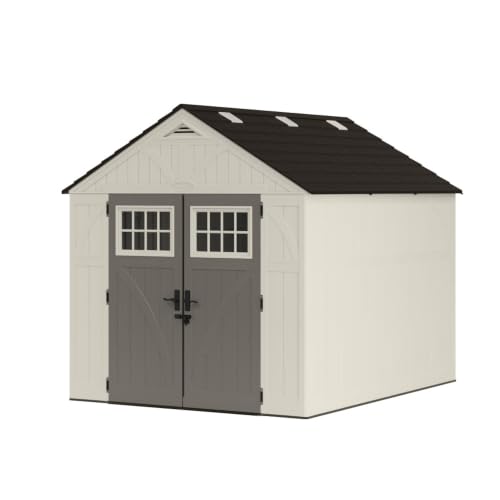
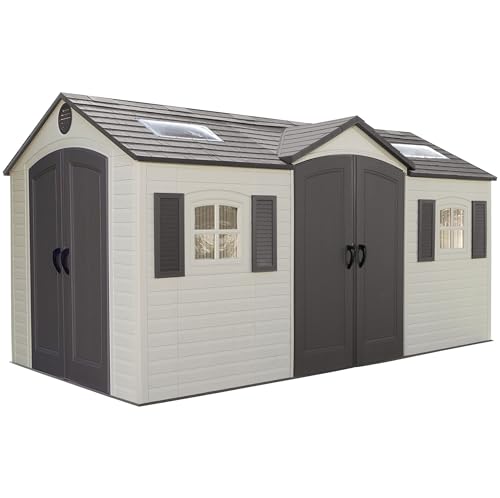
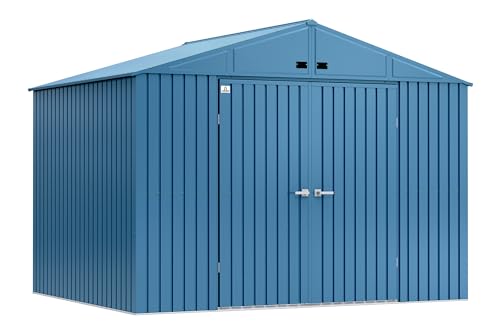
For a riding mower, start with the Suncast Tremont 8x10: it has the widest door we list at 5 ft by 6 ft and a floor Suncast says is built for lawnmowers and tractors. The Lifetime 15x8 Dual-Entry Shed adds two door sets, and the Arrow Elite 10x8 Steel Shed is a mid-range steel option. Measure your mower first.
A riding mower is the hardest thing most homeowners try to put in a backyard shed. It is wide, it is heavy, and it has to roll through a door and onto a floor that must carry its weight. Plenty of sheds sold as “lawn and garden” storage are fine for rakes and a push mower and then fall short for a rider. This guide shows what to measure, what to ask the maker, and which of the sheds on our list are worth a closer look for a riding mower, a walk-behind mower or a snow blower.
We do not handle these products ourselves. Every number below comes from the manufacturer’s own product page, and where a maker does not publish a figure, we say so instead of guessing.
Start With the Door, Not the Shed Size
Shed listings lead with floor area, such as 8x10 feet. For a mower, the number that decides the purchase is the door opening. A shed can be spacious inside and still be impossible to use if the mower will not pass through the doorway.
Measure your own machine before you shop:
- Widest point. For a riding mower this is usually the mower deck or the discharge chute side, not the wheels. Measure it with the chute in its working position, and again with it folded if your model allows that.
- Height. Check the top of the steering wheel, any roll bar and the seat. Many sheds have a lower opening at the top of the door than the headroom inside.
- Length. A rider can be six feet long or more. You need room to drive in, stop, and still close the doors.
- Turning space. Most lawn tractors cannot spin in place. If you plan to reverse out, leave clear floor behind the mower.
Then compare your numbers with the door opening the maker publishes, and leave a few inches on each side. We only say a specific shed fits a riding mower when the maker says so. Otherwise we give you the published door and interior sizes and let your tape measure do the rest.
What the Published Door Numbers Look Like
According to the makers’ pages we opened, door openings across our list range from about 25 inches to 5 feet:
- Suncast Tremont 8x10: 5 ft wide by 6 ft high.
- Lifetime 8x10 shed: 4.6 ft wide by 6.3 ft high.
- Lifetime 15x8 dual-entry shed: 4.6 ft by 6.2 ft, with two sets of double doors.
- Keter Factor 8x6: entry width of 54.5 in.
- Keter Darwin 6x8: entry width of 46.9 in., with double doors on the narrow end.
- Arrow Elite 10x8: swing doors with an opening of about 63 in. wide at the top. Arrow’s page data on height is inconsistent, so we do not give a figure.
A deck rated for a given cutting width is not the same as the overall width of the machine, so measure the actual machine.
The Floor: Built for Weight or Not
A riding mower puts hundreds of pounds on a few small wheel contact patches. A thin floor can flex, crack or sag over time. Look for a maker statement about heavy loads.
Suncast is the clearest here. According to Suncast, the Tremont 8x10 has a reinforced resin floor built to withstand heavy loads such as lawnmowers, tractors and other large outdoor equipment. That is a statement about the floor, not a promise that every mower will fit through the door, so you still need to measure.
The Lifetime sheds on our list include an HDPE floor, which Lifetime describes as oil, stain and slip resistant on the 15x8 model. Lifetime’s pages we opened do not rate the floor for a riding mower, so contact the maker before you roll a heavy rider onto it. The Arrow Elite 10x8 is different: the floor is not included, and Arrow sells a floor frame kit separately. Plan that cost and the base you build under it if you pick the Arrow.
Foundation and Ramp: Plan the Ground, Too
Even a strong floor needs a level, well-drained base. Every shed maker publishes a foundation instruction or minimum base size in the assembly materials, so read yours before you pour, lay pavers or build a wood frame. Lifetime states that the foundation is not included with its 8x10 shed, and Keter lists a minimum foundation size for its models.
Two practical points apply to any mower shed:
- Threshold height. If the shed floor sits above the ground, you need a way to roll the mower up. A ramp or a gravel and paver approach that meets the door sill is the usual answer. The maker pages we opened do not supply a ramp, so plan one yourself and make sure it can carry the weight of your machine.
- Slope and drainage. A shed on a slope or on soft soil can shift, and a door that binds is a common complaint. Level the base, and follow the manual.
Fuel, Batteries and Engine Safety
A gas mower or snow blower comes with its own rules.
- Store only. Never start or run a mower, snow blower or any engine inside a shed. Move the machine outside first.
- Engine off and cool. Let the engine cool before you roll it in.
- Fuel in an approved container. Keep fuel in a container made for it, and follow the mower’s manual for storage instructions. Do not store fuel loose or in a container that is not designed for gasoline.
- Read the manual. The mower maker’s owner’s manual is the authority on storage, fuel treatment for the off-season and battery care.
We are not quoting a code or a safety number here, because the public safety pages we looked for while writing this guide would not open. If you want to check local rules about fuel storage, ask your local fire department or building department.
Permits, HOA Rules and Local Codes
A large shed is more likely to trigger a permit than a small one. Lifetime’s own advice is to consult your local building codes to see whether a shed needs a permit. Do that before you order, and check your HOA rules on size, color and placement. We do not state a permit size threshold because rules differ by city and county.
Which Sheds on Our List Suit a Mower
Best Match for a Riding Mower: Suncast Tremont 8x10
A premium resin shed with a 5 ft by 6 ft door opening and a floor Suncast says is built for lawnmowers and tractors. Measure your mower against the door first.
This is the one shed on our list where the maker itself connects the floor to lawnmowers and tractors. Suncast lists an interior of 7 ft 9 in. wide by 9 ft 9 in. deep and 8 ft 4.5 in. high, with 547 cu ft of capacity and a 10-year limited warranty. The door opening is the widest and tallest we list. It is still a measurement exercise: if your riding mower is wider than 5 feet, it will not pass, and Suncast does not state which mowers fit. Our Suncast Tremont profile has the full spec list. It ranks in the premium range, so expect it to cost more than the entry-level resin sheds.
Best for Mower Plus Everything Else: Lifetime 15x8 Dual-Entry Shed
A premium 15x8 shed with two sets of double doors and 109.5 sq ft of floor space. A fit for a mower, a snow blower and a workbench zone.
The Lifetime 60079 has two entries, which helps if you want a mower at one end and garden gear or a snow blower at the other. According to Lifetime, the door opening is 4.6 ft by 6.2 ft and the interior floor space is 109.5 sq ft. The interior walls are 14.5 ft by 7.5 ft with a 5.9 ft wall height. It includes an HDPE floor, shelves and peg strips. Lifetime does not say the floor is rated for a riding mower, so treat it as a space-and-doors choice and check the weight question with Lifetime. See our Lifetime 15x8 profile.
Best Steel Option: Arrow Elite 10x8 Steel Shed
A mid-range Galvalume steel shed with swing doors about 63 inches wide at the top. The floor is not included, so budget for a floor frame kit.
Arrow’s steel shed has a roughly 63 in. wide door opening at the top, which is wide for a shed at this size. It is a different construction from the resin sheds above: Galvalume steel, a high gable roof and a 15-year limited warranty according to Arrow. The key issue for a mower is the floor. It is not included, so you build the base, and Arrow sells a floor frame kit separately. That can suit a mower owner who wants a concrete slab. Read the details in our Arrow Elite 10x8 profile.
Smaller Machines: Walk-Behind Mowers and Snow Blowers
If you own a walk-behind mower or a snow blower, you have more options. These machines are much narrower than a riding mower, and the handles are often the limiting factor.
- The Lifetime 8x10 shed has a 4.6 ft by 6.3 ft opening and a 71.4 sq ft floor, so it handles a push mower and a snow blower side by side. See the Lifetime 8x10 profile.
- The Keter Factor 8x6 lists a 54.5 in. entry width and 285 cu ft of capacity, a mid-range pick for a push mower and tools. See the Keter Factor 8x6 profile.
- The Keter Darwin 6x8 is entry-level, with a 46.9 in. entry width. Keter says the doors let ladders, lawnmowers and garden tools move in and out. See the Keter Darwin 6x8 profile.
Skip the Keter Darwin 4x6 for any mower: its door is a single 25.5 in. opening. The Keter Store-It-Out Prime XL is a low horizontal shed for bins and tools, not a walk-in shed.
How to Decide
- Measure your mower or snow blower at its widest and tallest point.
- Compare it with the door opening on the maker’s page, with a few inches to spare.
- Check that the maker rates the floor for heavy equipment, or ask them.
- Plan the base, the threshold and a ramp before the shed arrives.
- Check permits and HOA rules, then order.
For a broader look at every shed we cover, see our storage shed comparison.
Sources
- Suncast Tremont 8 ft. x 10 ft. Storage Shed, official product page
- Lifetime 15 ft x 8 ft Outdoor Storage Shed, official product page
- Lifetime 8 ft x 10 ft Outdoor Storage Shed, official product page
- Arrow Elite Steel Shed 10x8, official product page
- Keter Factor 8x6 Storage Shed, official product page
- Keter Darwin 6x8 Storage Shed, official product page
- Keter Darwin 4x6 Storage Shed, official product page
Frequently asked questions
Will a riding lawn mower fit through a standard shed door?
Not necessarily. Many resin sheds have double doors about 4 to 5 feet wide, and a riding mower deck, wheels and discharge chute can be wider than that. Measure the widest point of your mower and compare it with the door opening the maker publishes. Suncast lists 5 ft wide by 6 ft high for the Tremont 8x10, and Lifetime lists 4.6 ft by 6.3 ft for its 8x10 shed.
Does the shed floor need to be special for a mower?
Look for a floor the maker rates for heavy equipment. According to Suncast, the Tremont's reinforced resin floor is built to withstand lawnmowers, tractors and other large outdoor equipment. For other sheds, the makers' pages we opened do not make that claim, so ask the maker before parking a heavy machine on the floor.
Do I need a ramp to roll a mower into a shed?
It depends on the threshold. If the floor sits higher than the ground, a mower needs a ramp or a base that brings the ground up to the door sill. None of the maker pages we opened describe a ramp, so plan your own foundation and approach, and follow the shed's assembly manual.
Can I run or warm up the mower inside the shed?
No. Store the mower only, with the engine off and cool, and keep fuel in an approved container as the mower's manual describes. Move the machine outside before you start it.
Is a small shed enough for a walk-behind mower or a snow blower?
Often yes. A walk-behind mower or single-stage snow blower is far narrower than a riding mower, so an 8x6 or 6x8 shed with a 47 to 55 inch door can work. Measure the machine with the handles folded as the manual allows, and leave room to turn it.
Do I need a permit or HOA approval for a shed?
Consult your local building codes to see whether a shed of that size needs a permit, as Lifetime advises, and check your HOA rules before you order. Rules differ by town and neighborhood.