We earn a commission if you buy through our links, at no extra cost to you.
Best Storage Shed for Bikes: Doors, Floors, Locks
How to pick an outdoor storage shed for bicycles: door width vs handlebars, floor and anchoring, locking and airflow, plus three Keter and Arrow models.
At a glance
For bikes, the Keter Darwin 6x8 is the entry-level pick, with a 46.9-inch entry and a floor included. The Arrow Elite 10x8 is the mid-range steel option with a wider swing-door opening, but its floor is sold separately. The Keter Factor 8x6 is a mid-range resin shed with a 54.5-inch entry.
Bikes are awkward things to store. They are long, they have handlebars and pedals that catch on every edge, and they come in and out of the shed far more often than a box of holiday decorations. Leaning them against a fence or under a tarp works for a few weeks, then the chain rusts, the seat cracks and someone walks off with one. A proper shed fixes that, but only if the door, the floor and the layout suit a bicycle. This guide covers what to measure, what to check and which of the sheds on our list make sense for bikes.
We did not handle any of these sheds. We compared the specs the manufacturers publish and, where a number is missing, we say so. For the whole lineup, see our best storage sheds of 2026 ranking.
Start With the Door, Not the Floor Space
Buyers fixate on square footage, but with bikes the door is the bottleneck. A shed can be roomy inside and still be a pain if the opening is narrow or if you have to lift the front wheel over a lip every time.
Measure these before you shop:
- Handlebar width. Measure grip end to grip end on your widest bike, usually a mountain bike or a cruiser. Add a few inches so your knuckles clear the frame.
- Bike length. Measure from the front tire to the rear tire. Compare it with the interior depth, not the exterior size.
- Rack, basket or child seat. Add-ons make a bike taller and wider. Measure the bike as you actually ride it.
- Doorway. Compare your handlebar width with the entry width the maker lists, and check whether the opening is measured at the top or the bottom of the doors.
One caveat on the door numbers: makers do not all measure the same way. Arrow, for example, gives an opening of about 63 inches wide at the top of the swing doors and does not publish a reliable door height, so confirm the dimensions with Arrow or ShelterLogic before you buy if height matters to you.
Floors, Thresholds and Ramps
Nothing in the Keter pages we opened for the Darwin 6x8 or the Factor 8x6 mentions a ramp or gives a threshold height. That does not mean the doorway is a problem, but it means you should plan on measuring the lip yourself, or look closely at the manufacturer’s photos. If you ride heavy bikes, such as a cargo bike or an e-bike, check the floor rating with the maker before you roll one in. Keter does not state a floor load rating on the pages we read. If the shed sits a few inches above grade, a simple plank ramp or a paver step makes entry much easier and protects the door edge.
Most of our picks come with a floor. The Arrow Elite is the exception: Arrow lists the roof, walls, gables, frame, doors, hardware and instructions, and sells a floor frame kit separately. Count that extra purchase and the work of building a base if you are comparing it with the resin sheds.
Foundation and Anchoring
Whatever you buy, put it on a flat, firm base. Compacted gravel, pavers or a concrete slab are the usual choices, and each maker’s manual spells out what it needs. Keter lists a minimum foundation size of 72 by 96 inches for the Darwin 6x8 and 97.6 by 70.1 inches for the Factor 8x6. Both have 8 anchor spots in the floor. Use them. A resin shed that weighs a couple hundred pounds is light, and a few bikes inside do not make it stable in a gust. Keter lists wind resistance up to 65 mph for both resin models, but that is the manufacturer’s figure, not a reason to skip the anchors.
Locking Up Your Bikes
Bikes are a favorite target. Keter says the doors on the Darwin and Factor sheds are lockable, but the padlock is not included. Arrow’s Elite has a brushed nickel handle with a key lock, so there is a basic latch from day one. A shed lock keeps out casual visitors; it does not stop a determined thief with a pry bar. Practical steps help:
- Use a hardened padlock rather than the cheapest one on the rack.
- Add a ground anchor or a wall anchor and lock the frame, not just the wheel, to it.
- Keep a photo of each bike and write down the serial numbers.
- Put a light or camera where it covers the door.
Ventilation and Moisture
A bike shed does not need to be dry as a basement, but it should not hold humidity. Wet bikes, tires and a damp floor create condensation. Keter lists built-in ventilation for the Darwin 6x8 and the Factor 8x6, and Arrow lists vented gables. Ventilation reduces moisture buildup, but it will not fix a shed set in a low spot where water pools. Pick a high, drained location, wipe off bikes that come in wet and keep cardboard, rags and cushions off the floor.
Placement, Permits and HOA Rules
Put the shed where you can reach the door in a straight line, with room to turn a bike without scraping the wall. Leave a few inches of clearance around the walls for airflow and for reaching the panels. Avoid a spot under a roof edge that dumps snow or a downspout that pours onto the shed.
On permits, we only repeat what Lifetime states on its own page: check your local building codes to see whether a shed needs a permit. We did not open a code page that gives a size threshold, so we will not quote one. Call your building department, ask about accessory buildings and distance from property lines, and read your HOA documents on size, color and placement before you order.
Shed Picks for Bikes
Keter Darwin 6x8: The Narrow, Deep Entry-Level Pick
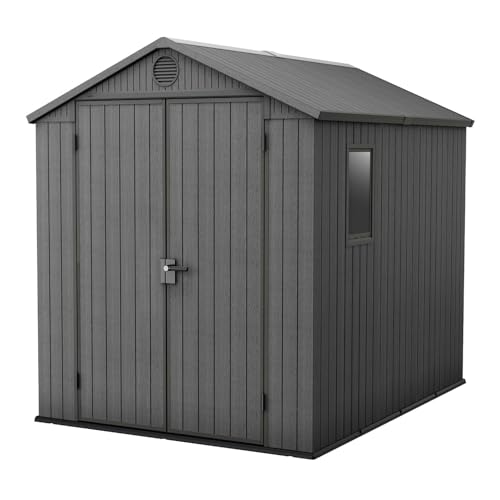
A resin shed with a floor included, a 46.9-inch entry and 92 inches of interior depth. An entry-level option for a few bikes along a side yard.
According to Keter, the Darwin 6x8 measures 75 inches wide and 96 inches deep outside, and 69 by 92 inches inside, with an interior height of 84 inches. The double doors are on the narrow end, and the entry is 46.9 inches wide. That shape suits bikes well: roll them in front to back along the deep axis and you do not fight the walls. Keter says the doors let ladders, lawnmowers and garden tools move in and out. The shed has a window, built-in ventilation, a floor with 8 anchor spots and lockable doors; the padlock is not included. If your handlebars are wider than the 46.9-inch entry, or you ride a wide cruiser, check the numbers twice. Our Keter Darwin 6x8 profile has the details. Do not confuse it with the Keter Darwin 4x6, which has a single 25.5-inch door and is not meant for bikes.
Arrow Elite 10x8: The Mid-Range Steel Shed With Room
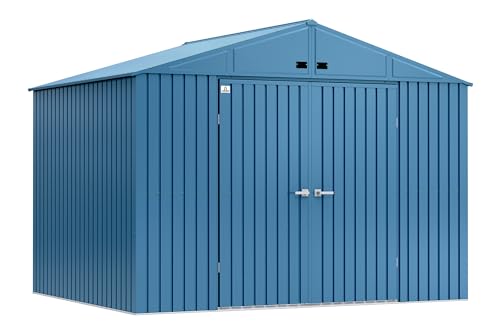
A steel shed with wide swing doors and a key-lock handle. A mid-range choice if you have more than a few bikes and are ready to add a floor.
Arrow’s Elite is a Galvalume steel shed with a textured finish, a high gable roof and a storage area of 78 square feet. The swing-door opening is about 63 inches wide at the top, the widest of the three picks here, and the interior is about 9 feet 9 inches by 7 feet 9 inches. That is the layout for a family with several bikes, a stroller and a trailer. The catch is the floor: it is not included. Arrow sells a floor frame kit separately, and anchoring hardware is also sold separately. Arrow also lists vented gables and a 15-year limited warranty. See our Arrow Elite 10x8 profile.
Keter Factor 8x6: The Mid-Range Resin Shed With a Wide Entry
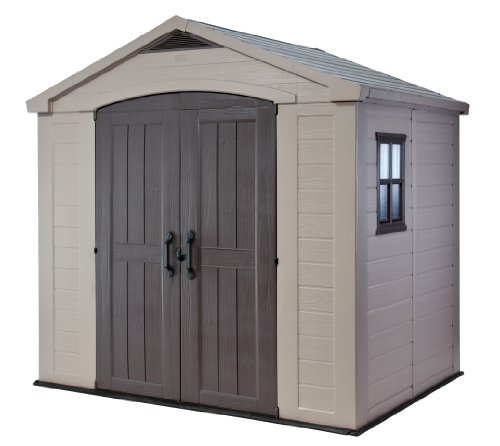
A resin shed with a 54.5-inch entry, a floor, a window, a skylight and two shelves. A mid-range pick for bikes, a mower and tools in one place.
Keter says the Factor’s wide double doors are made for lawnmowers, bikes and other bulky equipment. The entry is 54.5 inches. Inside it measures 93 inches wide, 64 inches deep and 94 inches high, so the depth is the number to check against your bike length. You can park a bike or two along the back wall, and the two included shelves handle helmets and pumps. The floor has 8 anchor spots, and Keter lists built-in ventilation, a window and a skylight. Read our Keter Factor 8x6 profile for the full numbers.
Quick Comparison
| Shed | Range | Entry width | Floor | Best for |
|---|---|---|---|---|
| Keter Darwin 6x8 | Entry-level | 46.9 in. | Included | A few bikes along a side yard |
| Arrow Elite 10x8 | Mid-range | About 63 in. at the top | Not included | Several bikes plus gear |
| Keter Factor 8x6 | Mid-range | 54.5 in. | Included | Bikes, a mower and tools |
How to Choose
If you have two or three bikes and a narrow strip of yard, the Darwin 6x8 is the entry-level pick; just confirm that your handlebars clear the 46.9-inch entry. If you need a wider door and can live with a shallower shed, the Factor 8x6 is the mid-range resin choice with the floor included. If you have a bigger household and do not mind adding a floor, the Arrow Elite gives the widest opening of the three.
For other uses, our trash can shed guide covers bins, and the Keter Store-It-Out Prime XL profile explains why a low cabinet is not a bike shed.
Sources
Frequently asked questions
How wide should the door of a bike shed be?
Wider than your widest bike measured at the handlebars, with room to spare for your hands and knuckles. Measure from grip end to grip end, then compare that number with the manufacturer's stated door or entry width. Keter lists a 46.9-inch entry for the Darwin 6x8 and a 54.5-inch entry for the Factor 8x6. Arrow gives about 63 inches at the top of the Elite 10x8 opening.
Can I roll a bike straight into a resin shed?
Only if the door threshold and floor allow it. Keter's pages for the Darwin 6x8 and Factor 8x6 do not describe a ramp or give a threshold height, so look at the doorway on the product photos and measure the step with your own bike in mind. The Prime XL page mentions a sloped threshold, but that shed is a low cabinet and is not meant for bikes.
Do I need to anchor a shed that holds bikes?
Yes, anchor it. Keter lists 8 anchor spots on the floor of both the Darwin 6x8 and the Factor 8x6, and a resin shed is light enough to shift in strong wind when it is nearly empty. Arrow sells anchor kits separately for the Elite, and its floor frame kit is also separate. Follow the manual for the foundation and fasteners.
How do I keep bikes from rusting in a shed?
Keep air moving and keep moisture out. Wipe off bikes that come in wet, leave the door open on dry days, and do not store them on bare ground. Keter lists built-in ventilation for the Darwin 6x8 and Factor 8x6, and Arrow lists vented gables for the Elite. Ventilation reduces moisture buildup but does not turn a shed into a dry room.
Are these sheds secure enough for expensive bikes?
They are a deterrent, not a vault. Keter says its doors can be locked with a padlock you add yourself, and Arrow includes a key-lock handle. For a pricey bike, add a ground anchor or a lock through the frame, keep serial numbers, and consider a light or camera near the door.
Do I need a permit or HOA approval for a bike shed?
Possibly. Rules vary by city, county and neighborhood. Lifetime's own advice is to check local building codes to see whether a shed needs a permit, and that is a good first call. Also read your HOA documents on size, color and placement before you order.